Why and How You Should Be Foam Rolling

IMG_1918.JPG

Looking after your health and well-being is important now more than ever as the COVID-19 lockdowns continue. Having to adapt to a different working environment and exercise routine can lead to your body feeling increased muscle tension, making it all the more important to practice extra self-care.

What is foam rolling, and why should I do it?

The foam roller has become a popular and convenient way to release muscle tension in the comfort of your own home. Not to mention it helps improve flexibility! Foam rolling is a method of self-massage that effectively reduces muscle tension and pain. When carried out before a workout, it can enhance physical performance and joint flexibility. Post-exercise, it can reduce the onset time and severity of muscle soreness, and minimise the associated acute muscle fatigue that impacts your power and speed. Moreover, doing foam rolling exercises at the end of the day can relax your body before going to bed. 

If you have access to one at home, then you are ready to start the session. Otherwise, there are different types available in varying shapes, sizes and textures on the market, which are affordable to purchase. The most popular and easiest to use is a high-density foam model. 

Our physiotherapist Anna Diep is going to guide you through some effective foam rolling techniques which will target the larger muscle groups in your body. With UPG Studio’s lead yoga instructor Keran Murphy demonstrating, we hope you benefit from this post.

How do I foam roll?

A few tips to consider before you start:

  • Complete each exercise for around 30-60 seconds (or slightly longer if you feel like it needs a bit more work).

  • Choose to incorporate both static stretching (keeping the roller still) as well as dynamic stretching (moving the roller over the muscle).

  • Ensure you’re rolling at a slow to medium speed to increase the effectiveness.

  • If you are new and still familiarising yourself with foam rolling, start with a lighter pressure and build up the pressure as you become familiar with the techniques. You should feel a moderate amount of discomfort through tender areas in the muscles but you should not be in excruciating pain. 

  • Ensure you keep breathing whilst foam rolling and avoid holding your breath. Taking a deep breath in slowly, holding for a couple seconds, then releasing slowly can help relax your muscles further for any of those extra tight spots.

  • Try to incorporate foam rolling into your regular routine (every 2 to 3 days).

Upper Back and Pectorals (Chest)

animated 3.GIF
  • Place the roller vertically in line with your upper spine.

  • Knees should be bent, with your feet pressed firmly onto the floor.

  • Lie on top of the roller, with your arms out relaxed beside you.

  • As your shoulders drop towards the floor, you should feel a stretch across your chest.

  • Slowly move your arms above your head and down beside your hips a few times to intensify the stretch.

Upper/Lower Back Roll

animated 2.GIF
  • Lay on your back with your knees bent, cradling your head in the palm of your hands with the foam roller across your shoulder blades.

  • Have your knees slightly bent. Lift your hips up off the floor and use your legs to roll your body up and down the foam roller. 

  • Aim to relax your upper body and let your spine flow gently backwards.

Quadriceps (Front of your Thigh)

animated 5.GIF
  • Start on your hands and knees with the roller underneath you.

  • Lay over the roller with either 1 leg (easier alternative) or both legs as demonstrated.

  • Walk your elbows forwards and backwards slowly, rolling between your hips and above your knees.

Gluteus Maximus (Bottom)

animated 7.GIF
  • Sit on the foam roller placing the one leg over the other at a 90 degree angle with your ankle above your knee.

  • Support yourself with the arm that is on the same side as the leg that is crossed, while gently pushing the knee down with the opposite arm.

  • Use the supported leg to gently push yourself forwards and backward in a range of 10-15cm, applying pressure to the whole outer portion of the outer hip. You can also rock from side to side or maintain a sustained pressure over any of those tight spots.

Hamstrings (Back of your legs)

animated.GIF
  • Sit on the foam roller with one leg extended up and the other leg bent for support, arms placed slightly behind you.

  • Using your arms and the supporting leg, shift your weight forwards and backwards so that the roller is moving between your bottom and your knees.

Iliotibial band (Side of your legs)

animated 2.GIF
  • Lie on your side with the foam roller underneath your hips, with your bottom forearm resting in line with the shoulder and your top arm in front of your chest.

  • Cross your top leg over to the front, while the bottom leg remains straight. Use your supporting leg and arms to guide the roller between your hips down to your knees.

Calves

animated 8.GIF
  • Start by sitting on your bottom with your arms placed slightly behind you.

  • Place both of your legs over the roller and lift your bottom off the floor.

  • (Easier alternative: Place one leg over the roller with the other leg bent. Push through your supporting leg and lift your bottom off the floor).

  • Use your arms to shift your weight forwards and backwards, with the roller moving between your ankles and below your knees.

If you are experiencing any injury or pain, our physios are here to help. Our South Yarra and Malvern clinics are still offering 1:1 physiotherapy consultations (with all necessary precautions in place), as we remain an essential health service. 

Book an appointment with us so that we can prescribe specific exercises and treatment to help you reduce symptoms, as well as provide advice on how to prevent future pain. 

If you are unable to attend a physiotherapy appointment in person, contact our South Yarra clinic at info@unitedphysiogroup.com.au to arrange a telehealth consultation. 

Stay safe, healthy, and check in on one another during this period. Happy foam rolling!

The Kapalabhati breathing technique explained.

Our yoga teacher Annabel practicing Kapalabhati.

Our yoga teacher Annabel practicing Kapalabhati.

Kapalabhati, also known as breath of fire, is a pranayama - a yogic breathing technique that cleanses, detoxifies and invigorates your mind and body. The word kapalabhati is made up of two Sanskrit words: kapāla meaning 'skull', and bhāti meaning 'shining, illuminating'.

A fiery technique, it best done before an asana flow, rather than after. It is also best practiced on an empty stomach, sitting in an upright position such as crossed legged or on the shins.

Our yoga teacher Annabel explains step by step how to practice kapalabhati, which she regularly starts her classes with.

  1. Start by inhaling fully, taking your time and filling up your lungs.

  2. Then, begin by exhaling shortly and sharply through the nose for anywhere from 50 to 120 strokes (exhales). Your focus should mostly be on the exhales, letting your inhales happen naturally. Passively inhale, actively exhale.

  3. When finished the strokes, exhale deeply, then inhale again, completely and hold your breath for a few counts.

  4. Finally, exhale completely and return to the normal rhythm of breath. 

Tips: When practicing, think about puffing the belly in and out, sucking the navel towards the spine on the exhale. It can also be beneficial to place a block under your sit bones in order to align your spine, and to place your hands on your lower belly. 

Some other benefits include:

  • An increased amount of prana (energy) moving throughout your body. Notice how your body feels after the practice.. you might feel more energised, as an increased amount of blood will now be circulating throughout the your body. 

  • Kapalabhati also helps to calm the mind. When we are so focused on the ratio, pattern and force of the breath, we have no time to think of anything else. This allows our mind to settle and focus. 

If you are looking to practice yoga, South Yarra’s UPG Studio offers intimate, personalised classes to help you get the most out of your practice. Book a class with us here.

Yoga 'Pigeon' Pose

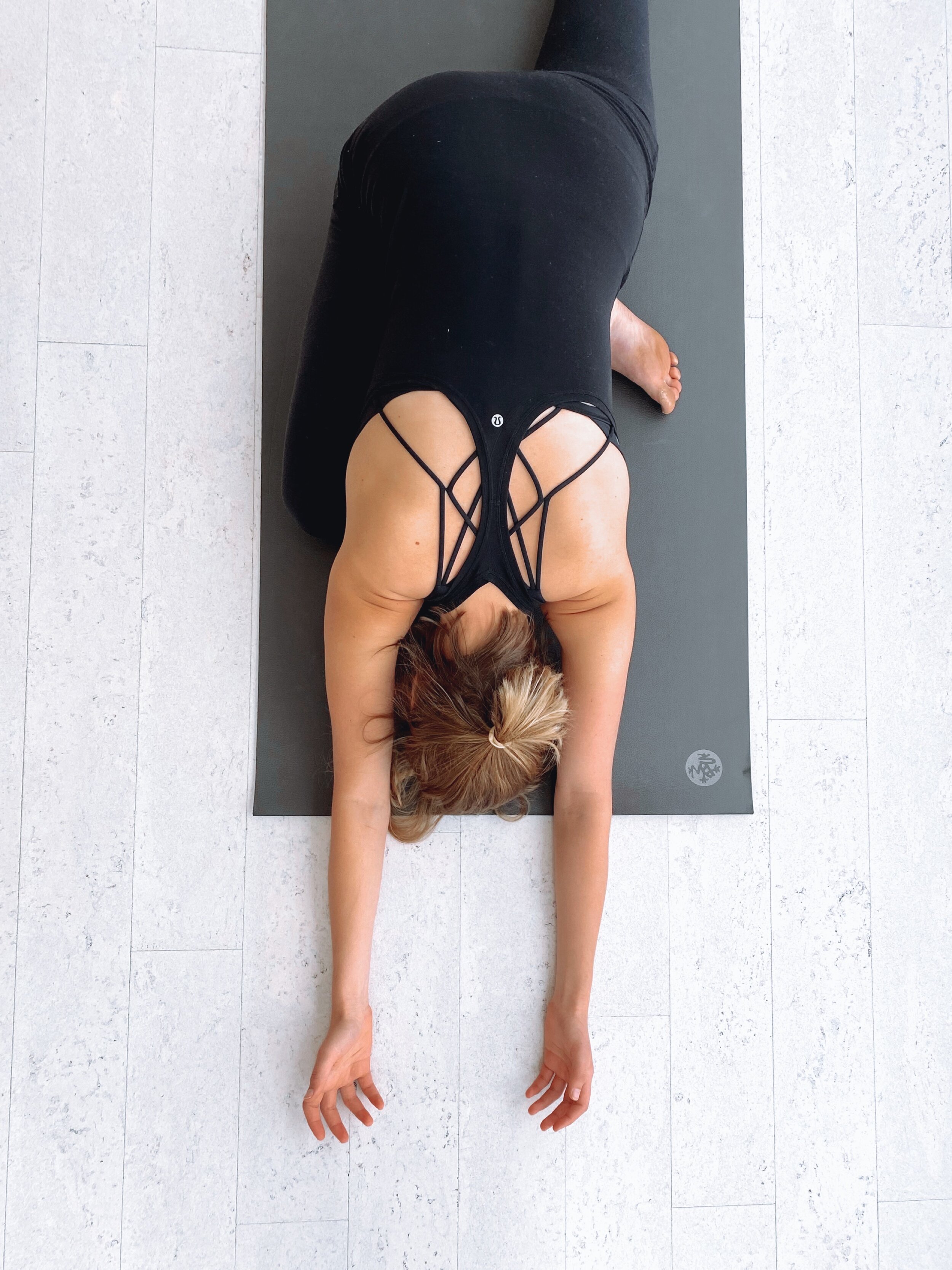
The ‘Pigeon’

Benefits of Half Pigeon include:

  • Release and opening of the hips, a place where we often hold a lot of built up emotions, especially for women. I find that it is beneficial for me to release stagnant energy and anxieties which I often hold in my hips

  • Stretches quads and glutes

Half pigeon pose is fairly accessible to all as it can be modified. Great options if you need a bit more support in pigeon include:

  • A block under the hip

  • A block under the forehead or arms

  • Remaining upright in seated half pigeon rather than folding all the way in

If you'd like to deepen the pose, some good options include:

  • Folding in over the top leg onto forearms or all the way to the floor

  • Moving into full mermaid by sitting upright and bending into the knee of the back leg, grabbing hold of your back foot. Option to bind here by bringing the elbow crease to the foot and interlocking the hands

  • Moving into full pigeon by swinging the back leg around and stacking it on top of the lower leg, with both shins parallel with the top of the mat

If half pigeon is not accessible to you a great alternative is reclined figure 4. To get into this shape (on the right side):

  • Lay on your back

  • Plant both feet flat on the floor with knees bent

  • Lift your right leg and place the ankle on top of the left knee, opening the right knee out to the side

  • Then grab hold of the back or front of your left knee and pull in towards your chest as much as feels comfortable

IMG_6124.JPG
“My favourite thing about yoga is: That it is for everyone.”
— Annabel Macfarlane
IMG_6123.JPG

Mat Pilates 'Pendulum' Exercise

The ‘Pendulum’

Difficulty: 2/5

Benefits: Works your obliques, making it good for posture as it holds up the spine

Remember to: Have your lower back imprinted into the mat

For a challenge: Squeeze circle to work inner thighs as well

IMG_6121.JPG
“Mat Pilates focuses on core strength and stability, as opposed to reformer Pilates which is great for the peripheral muscles. Paired together, they provide the perfect balance of muscle strengthening.”
Meet Grace McKee, our star Mat Pilates instructor.

Meet Grace McKee, our star Mat Pilates instructor.

5 Things We Need To Clear Up About Yoga

082A6016-min.jpg

The word ‘yoga’ means ‘union’, highlighting its holistic nature and focus on the connection between body, mind and spirit. Once you start to delve into the theory around yoga practice, you begin to realise that it goes far beyond trendy yoga studios and bendy Insta pics! 

1. The physical practice is only one small aspect of yoga

During my own training, our Master Yoga trainers all made a similar comment: that they would much rather teach someone who stays in child’s pose throughout the whole class and is tuning into their mind/body connection, compared to someone who is mindlessly pushing themselves through all the movements but focusing purely on the physical aspect.

The idea behind the physical practice of yoga is to tune into how the body is feeling and to practice mindfulness, connecting the physical practice with the mind. While there are certainly physical benefits to be gained, yoga can offer much more than this.

2. You don’t have to be flexible to do yoga!

“I would love to try yoga but I’m not flexible enough” is one of the most common statements I hear from people who have little experience with the practice. “Noooo”, I insist whenever I hear this statement, “anyone can do yoga!”. It’s true, flexibility is something that can be improved through the practice of yoga, but it certainly isn’t a requirement to start practicing! 

3. MYTH ALERT!: Yoga is “easy”

Anyone doing yoga correctly would know that this is a total misconception! There are so many different styles of yoga, and each style comes with different opportunities for self-improvement, both mentally and physically. 

In saying this, don’t be put off and think it’s ‘too hard’ either. The beauty is that we can all go at a pace that suits us individually, and improve on certain challenges in our own time. Knowing when to work hard and when to take it easy is key.

082A5599-min.jpg

4. There is no such thing as being the ‘best’ in the class

There is no pressure to ace every movement/pose in a class, and I can guarantee the teacher is not judging or disappointed if you can’t do a headstand! Yoga is all about doing what feels right in your body. A yoga teacher should never push students to move in a way that doesn’t feel right. They should always encourage the class to listen to their body and give the option of resting at any time. If you feel that you need to take a breather for whatever reason, get into your preferred position* and do just that! If you learn to listen to your body and do this, you’re doing yoga right!

*Common poses to rest in include Downward Dog and Child’s Pose. 

5. You don’t need to spend a fortune to be a yogi

Wearing groovy leggings and a singlet with a motivational slogan to a yoga class can be a fun routine for some people, but it is most definitely not a requirement. Any loose, comfortable clothing that you can find lying around the house will be just as suitable!

Another beauty of yoga is that it can be done anywhere – seriously, anywhere! While group classes are amazing and definitely recommended as they have their own benefits (guidance from the trainer, a feeling of connection etc.), not everyone can afford to go three times a week. Why not try going just once a week and then for the rest of the week practice in the comfort of your own lounge room or at the park? 

Article written by Rebecca Benini

Maximising your mindfulness practice in the workplace

With more awareness and knowledge surrounding Mindfulness as a practice, it is increasingly being used as a tool in many workplaces to help employees excel both professionally and personally. But what exactly is involved in being mindful, and how can we benefit from it? Here at UPG Studio, we are strong believers in making time for a daily mindfulness practice. From lunchtime team yoga sessions, to a Gratefulness Board in our office, our team do as much as we can to become our best mindful selves. Thanks to our friends over at Wellineux, who have perfectly summarised the science behind the fast-growing mindfulness movement, here are some of their tips on how you can apply it to your work day!

Original article here.

Studio-Ezra-UPG-Yoga-SouthYarra-AmeliaStanwix-Web 62.jpg

Mindfulness can be defined as the practice of focusing one’s attention to experiences that are occurring in the present moment. The benefits of it? Decreased stress, lower blood pressure and heart rate, increased awareness, and higher brain functioning. What’s the secret behind mindfulness? And importantly, how can mindfulness practices translate to a ‘well’ workplace?

With recent advances in the field of neuroscience, researchers have been able to gain deeper insight into how ancient eastern mindfulness practices can be translated into the workplace – benefiting our day-to-day.

In a landmark study, Dr. Sara Lazar, a neuroscientist at Harvard Medical School, used brain-imaging techniques to examine what happens in the brain during mindfulness training. Dr. Lazar compared brain scans of an experimental group who had completed an eight-week mindfulness-based stress reduction programme, against a controlled group who received no mindfulness training.

The results? It was found that the experimental group experienced significant changes in the amount of grey matter in five major brain regions. So, what is grey matter? It’s the matter that contains the brains important neuronal cell bodies – in the regions of learning, cognition, memory, emotional regulation, perspective taking, empathy, and compassion. The experimental group experienced a thickening of gray matter across the areas of those important areas of the brain. Whereas, the control group experienced a reduction in grey matter, especially in the fight or flight part of the brain that controls anxiety, fear, and stress.

The major health benefits stemming from practicing gratitude? A 23% reduction in cortisol – a stress hormone known to cause several health issues

Alongside mindfulness training, researchers have also proven that practicing regular expressions of gratitude leads to changes in the body’s biochemistry. So, what are the major health benefits stemming from practicing gratitude? A 23% reduction in cortisol – a stress hormone known to cause several health issues, having an effect on learning and memory, weight gain, immune function, and blood pressure.

So, what are some common mindfulness techniques that can be implemented into the workplace?

  1. Mindful Meditation; a mental training practice that involves focusing your mind on your experiences (like your own emotions, thoughts, and sensations) in the present moment. “It is simply the act of paying attention to whatever you are experiencing, as you experience it,” explains Kate Hanley, author of "A Year of Daily Calm."

  2. Breathing techniques; exercises that utlise the power of the breath, to focus attention on your breath, the inhale and exhale. Our breath constantly converts our life-sustaining energy, taking in oxygen, invigorating red blood cells and expelling carbon dioxide.

  3. Practicing gratitude: Gratitude is an emotion similar to appreciation, it’s the quality of being thankful – a readiness to show appreciation for and to return kindness. “I see it as a relationship-strengthening emotion,“ writes Dr. Robert Emmons, the world's leading scientific expert on gratitude “because it requires us to see how we’ve been supported and affirmed by other people.”

With the implementation of mindfulness programmes in the workplace, what kind of benefits could you see?

  • Increased attention and focus

  • Increased clarity in thinking and perception

  • Increased awareness

  • Creativity and innovation

  • More meaningful relationships with colleagues

The benefits are clear, mindfulness training can have an effect on how our workplace operates. Have you considered implementing mindfulness techniques into your wellness strategy? Wellineux offers various programmes that will help benefit your workplace on both an individual, and team level. Learn more about how we can implement Wellness Programmes, and Mindfulness Training, or come up with a unique programme that benefits your workplace.

Welcome to our new website (and studio!)

Studio-Ezra-UPG-Yoga-SouthYarra-AmeliaStanwix-Web 44.jpg

It’s been such an exciting journey for us so far, with the extension of United Physiotherapy Group’s services to introduce UPG Studio, a sunlit wellness studio that overlooks South Yarra’s skyline.

With yoga, Pilates and physiotherapy services under our belt, and a few other things we’re working on in the background, our vision for UPG Studio is to be a one-stop wellness destination in Melbourne.

Keep posted here for regular blog posts and updates!

Love,

The UPG Team